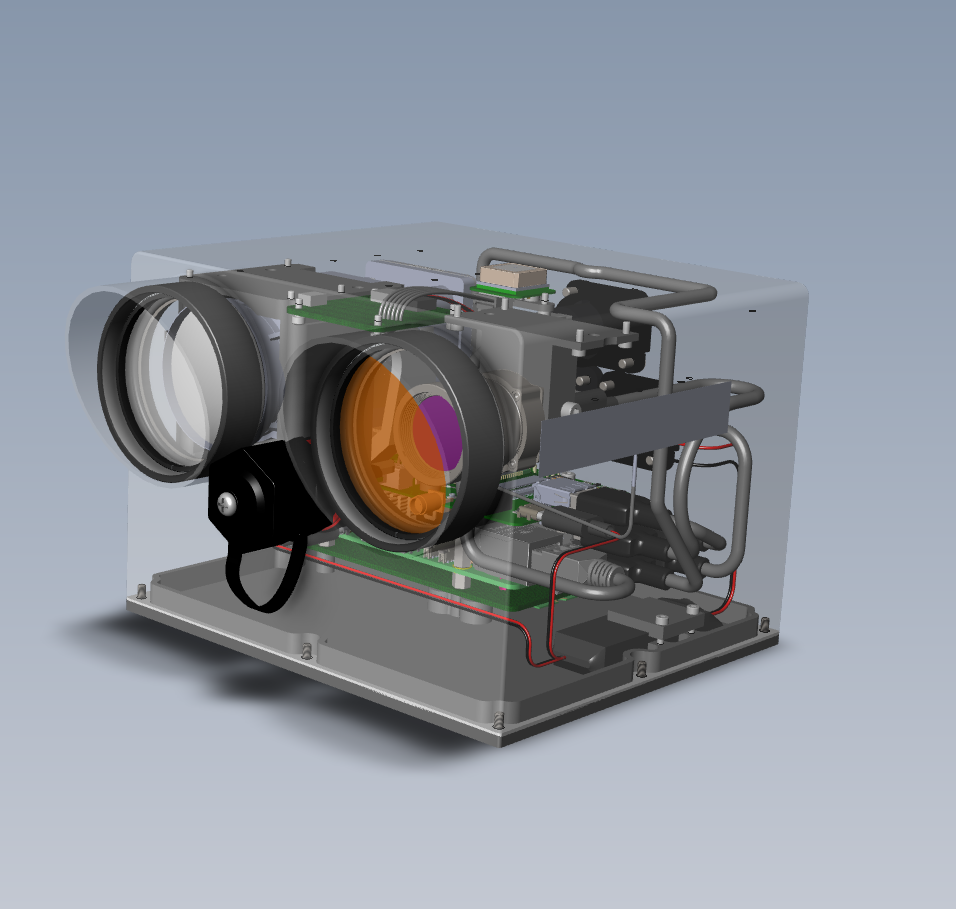
Optical imaging enables the observation, acquisition, and analysis of images or videos in a variety of fields, such as microscopy, machine vision, and astronomy. The design of optical imaging systems allows for the observation of objects at both the microscopic and macroscopic scales. The quality of the acquired images depends as much on the system components as on their configuration. Depending on the intended application and expected performance, the designed optical system may use standard off-the-shelf components or require custom-designed components (lenses, lighting, sensors, etc.). In any case, Arlumen has extensive expertise in this field to address your challenges and design an optimal imaging system.
What is optical imaging?
Optical imaging is the ability to capture and record images using a sensor, a lens, and a light source. An optical imaging system uses light across various spectral bands: UV, visible, and infrared.
The Many Applications of Imaging Systems
By having a thorough understanding of the entire design process for an imaging system, it is possible to configure various components to meet a specific need. As a result, optical imaging technologies are used in a wide range of applications—from the microscopic scale to the human scale to the spatial scale.
Recent innovations now make it possible to develop powerful systems: fire detection, security for critical infrastructure, autonomous transportation, space exploration, production line inspection, vision-based inspection…
Parameters and Sizing
Imaging systems generally consist of three essential components: the image sensor, the lens, and the light source.
Depending on the applications and desired performance, various parameters are selected:
- Depth of field: the range within which an object will appear in focus on the image sensor through the lens. Focus is the setting at which the image is sharpest.
- Working distance: the distance between the object being observed and the imaging lens.
- The field: the angular (or spatial) portion observed by the system.
- Magnification: microscopic or macroscopic, defined as the ratio of the size of the image to that of the object when viewed through an optical system.
- The spectral range: Visible, infrared, UV, THz
- Resolution: The ability of the optical system to distinguish more or fewer details in the image. Once the expected specifications have been properly defined, the task of designing the imaging system involves selecting or designing components while taking into account all environmental constraints (temperature, ambient lighting) as well as manufacturing and assembly constraints to minimize system defects: contrast, optical aberrations, vignetting, background noise…
Once the system has been defined, the prototyping phase will allow the actual system to be validated on dedicated test benches before moving into production. ARLUMEN is capable of carrying out all stages of imaging system development —feasibility studies, design, prototyping, and industrialization—and can handle production in small and medium-sized batches.
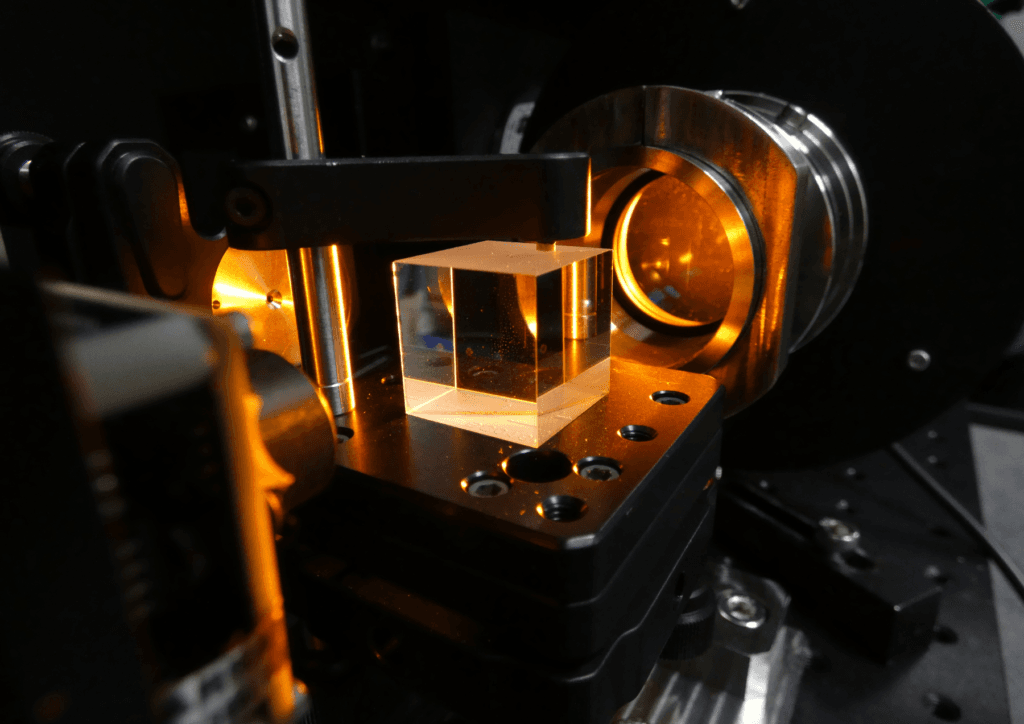
What are the benefits of imaging?
Imaging systems enable:
- Observing objects invisible to the naked eye.
- Measurements taken using non-invasive methods.
- The development of monitoring systems or automated detection processes.
Your custom-designed optical systems with Arlumen
Our core business is designing optical systems consisting of the three key components: sensor, lens, and light source. Benefit from support at every stage of your projects thanks to the combined expertise of our engineering department and our production capabilities. We support you from start to finish on your imaging system design projects.
During the design phase, Arlumen uses the Zemax optical simulation software. It enables the company to precisely design the lenses and light sources that will be integrated into the product. Through this modeling phase, it is possible to replicate and test the behavior of these various components in a specific environment.
With more than 16 years of experience, our teams have implemented numerous optical imaging techniques in design, prototyping, and production projects:
- Photoacoustics
- Clear field
- Polarization
- Differential Interferential Contrast
- Fluorescence
- OCT
- Confocal
- Interferometry
- RAMAN
Case Studys : Optical imaging applied to various industries
Since 2009, Arlumen has been supporting its clients on projects with a wide range of applications. Here are a few examples of how photonics is used for:
- Healthcare: endoscopy, microscopic inspection of dental imaging sensors, medical imaging, skin inspection...
- Agri-Food: Onboard detection camera for agri-food vision, light source for imaging systems.
- Industry / Logistics: Detection of manufacturing defects in microelectronics; line scan cameras for line detection by warehouse robots.
- Space: A Moon and Star Simulator for Qualifying Navigation Instruments (A camera aboard the Juice probe, now on a mission to Jupiter)
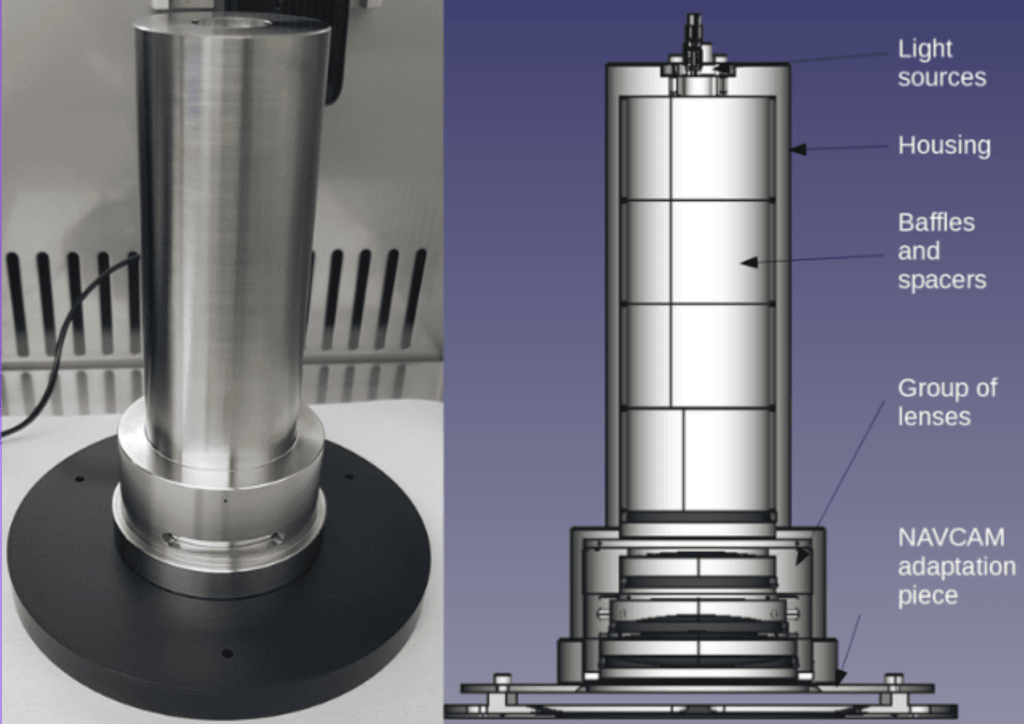
CASE STUDY: Design of a moon and star simulator that accurately replicates real-world space conditions
Before launching the JUICE probe to Jupiter, Sodern needed to qualify its navigation camera, which is essential for navigating between planets and tracking its trajectory by observing moons and stars. Arlumen served as an expert optics partner to design, integrate, and optimize the moon and star simulator, enabling the camera to be qualified prior to launch under conditions identical to those in space.
CASE STUDY: Vision system for detecting small variations in surface relief in harsh environments
For one of our customers, we designed and built an optical system for industrial inspection in harsh environments. This vision system is mounted on a robot, and can detect variations in small reliefs of the order of 10 micrometers (10 -5 meters).
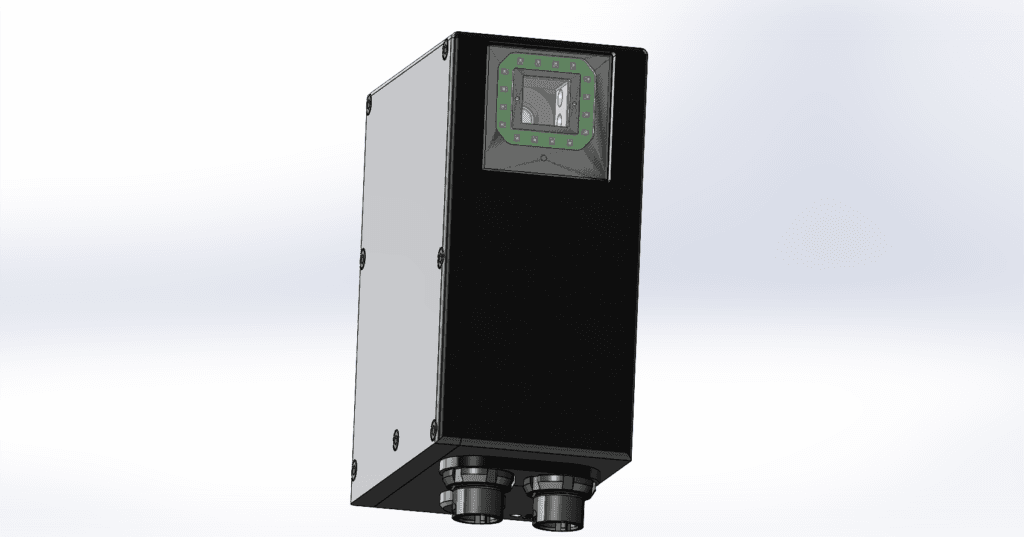
CASE STUDY: Eco-designed vision system for detecting and alerting to hazardous events
AzurIA is a French company based in the south of France. It develops algorithms and sensors incorporating Artificial Intelligence to detect high-risk natural events and provide real-time warnings.
As part of an Econum-certified project under the auspices of ADEME, AzurIA commissioned Arlumen to conduct the mechanical, optical, and thermal design study for its CamIA multispectral camera.