Photonics Applied to Defense: A Laser TOF
As part of the development of a Time-Of-Flight (TOF) laser sensor for field-based defense and security applications, the customer sought to design a compact system capable of detecting obstacles at long range with a high degree of reliability. This system, intended for integration into optronic surveillance and fire-control solutions deployed on land- and sea-based platforms, had to meet stringent integration and robustness requirements.
Arlumen served asan expert in optics, mechanics, and electronics to design and optimize the rangefinder’s overall architecture and finalize its industrialization.
Project objective:
Develop a high-performance, secure , and industrially scalable long-range laser rangefinder for defense applications
Technological challenges
The long-range laser rangefinder must combine a long measurement range, eye safety, and advanced optoelectronic integration. It allows you to:
- Ensure a maximum range of 30 km while maintaining an optimal signal-to-noise ratio, despite atmospheric attenuation and the low energy of the reflected signal.
- Use a 1550 nm pulsed laser source that complies with Class 1 (eye-safe) standards, combining high energy output with maximum eye protection.
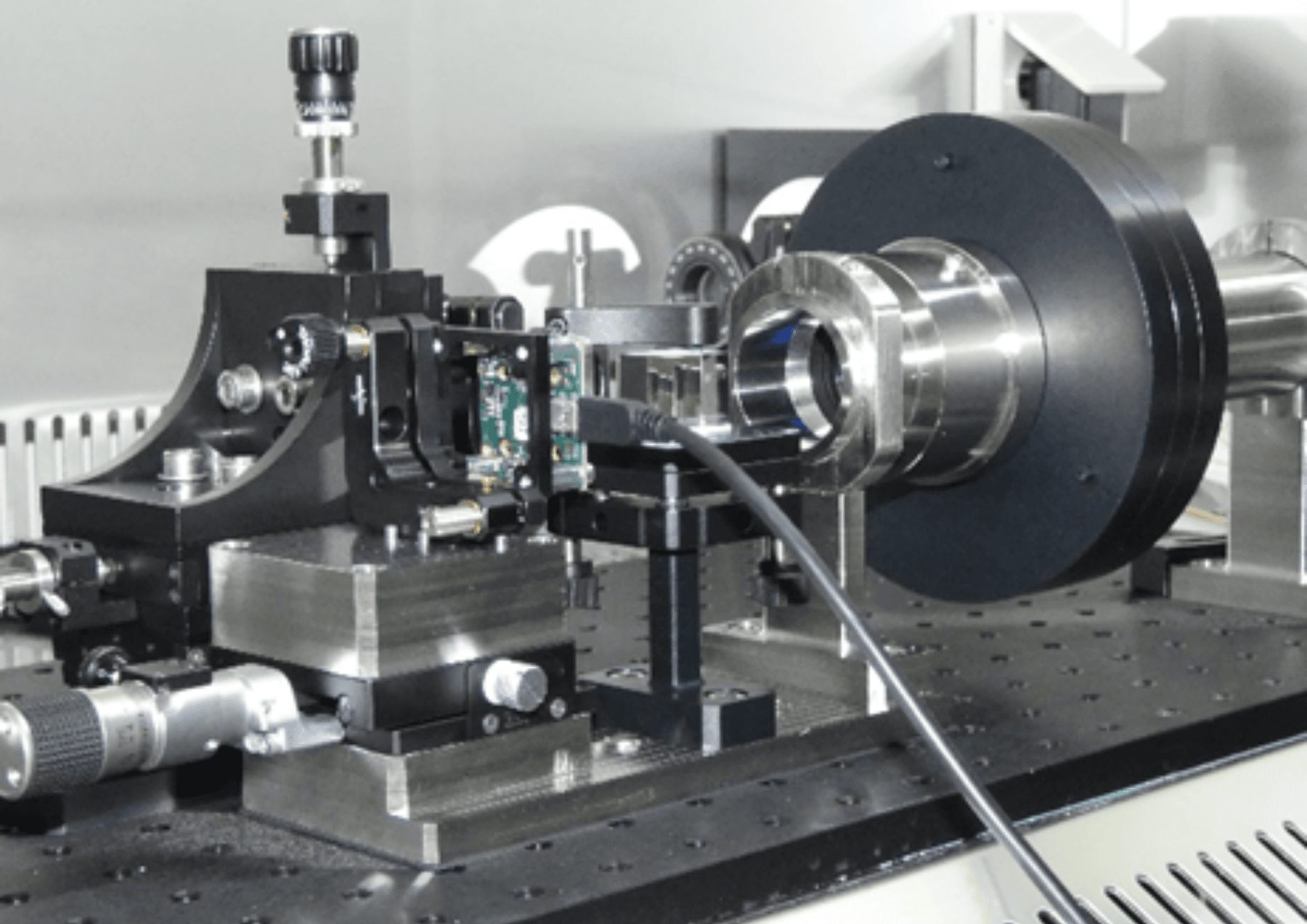
- Incorporate a detection photodiode, combined with a precise three-dimensional adjustment system, to optimize optical coupling and maximize the incident flux on the active surface.
- Design and manufacture power supply and detection circuit boards that interface with the customer's clock board, enabling precise timing and reliable synchronization between transmission and detection.
Solution designed and industrialized by Arlumen
Arlumen drew on its expertise in optics, mechanics, and electronics to design and bring to market a long-range LiDAR rangefinder based on an integrated architecture comprising:
- A 1550 nm laser transmission architecture optimized for a range of 30 km, maximizing overall optical efficiency and the signal-to-noise ratio.
- The optical design of the receiving system, including the selection and sizing of the lenses, as well as the integration of a photodiode optimized for optimal optical coupling.
- A three-dimensional adjustment system that ensures precise alignment and strict control of mechanical tolerances.
- The development of electronic power supply and sensing boards that interface with the existing clock board.
- Defining and implementing bonding, assembly, and tooling processes, enabling the development of adjustment procedures for the industrialization phase.
Achieved performance
- 1550 nm fiber laser , compliant with , safety class 1
- Range of up to 30 km
- Attenuation ratio of 43 dB at 500 m for targets with 85% reflectivity
- Highly accurate real-time measurements at a frequency of 20 Hz
- Measurement accuracy <, 1 m
- Robust architecture suited for industrial production