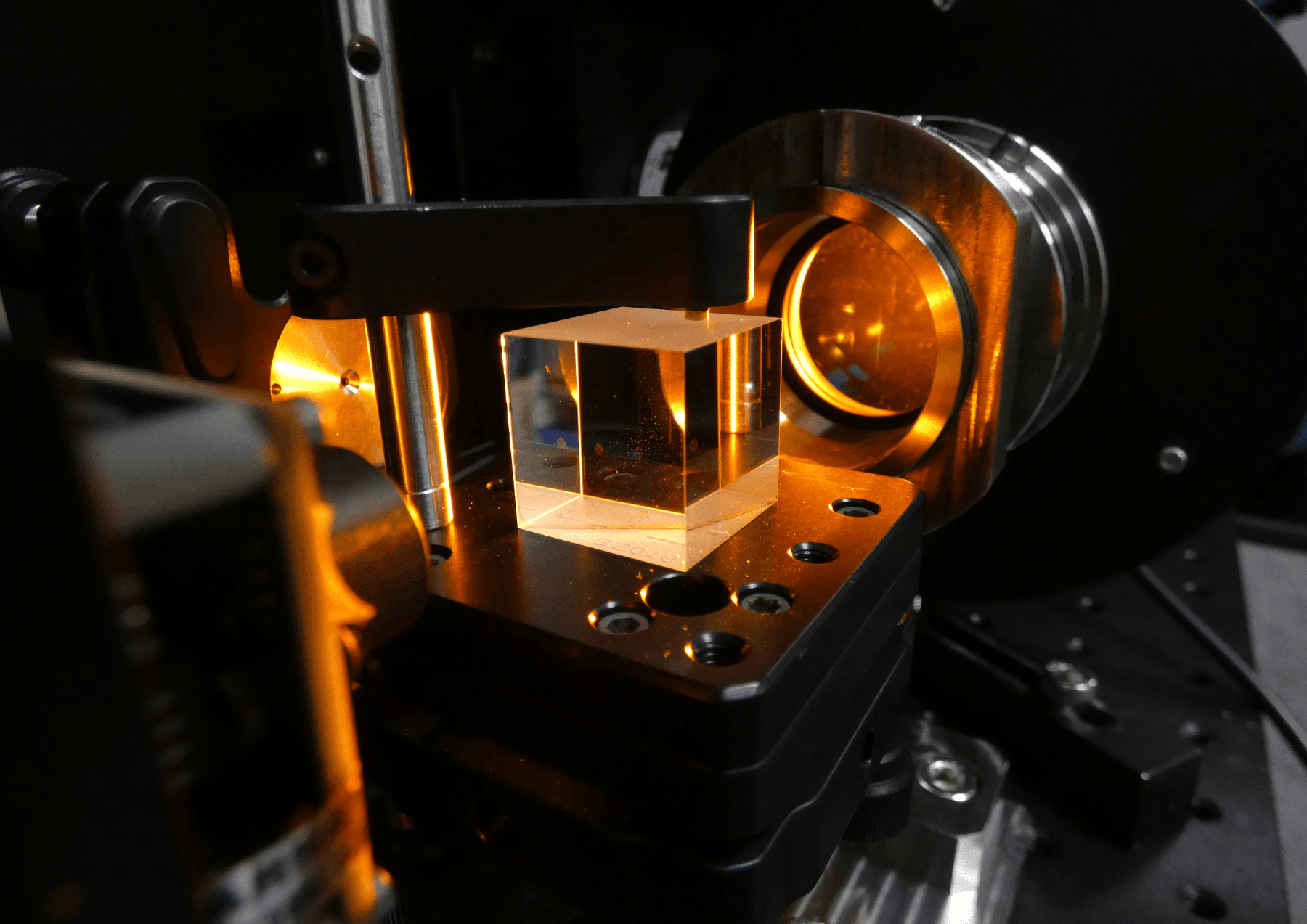
What is optical mounting?
Optical assembly is one of the last links in the Arlumen value chain, before the test phase. It involves assembling different optical, electronic or mechanical components to create a system that meets a specific need. At Arlumen, we provide our customers with customized optical assembly services.
At the end of the design phase, our engineering department draws up a precise manufacturing file containing the specifications of the system to be produced. This is accompanied by CAD drawings. These documents are then forwarded to the technicians who will carry out the assembly in our laboratories. We have several areas at our disposal for assembling customized optical systems: workshops, prototyping room, gray room, clean room...
Before we start manufacturing, we carry out an incoming inspection of the mechanical parts to check their conformity. Then comes the cleaning phase, which varies according to the type of material used. Technicians then assemble the opto-mechanical components, followed by the electronic and IT elements.
Once assembly is complete, the technician carries out final adjustments and compliance measurements. For series production, we provide customers with assembly instructions.

What are the special features of optical mounting?
Precision work in a variety of fields
Optical assembly calls on a wide range of skills and expertise, not only in optics, but also in mechanics, electronics and IT. Each of these fields requires specific knowledge.
Optical assembly is also a meticulous operation requiring great precision. Indeed, our technicians are sometimes called upon to perform operations under the microscope to implant electronic components and micro-components, as well as very small lenses. Gluing operations are particularly delicate, requiring experience and meticulousness to guarantee mechanical stability and cleanliness of the component, depending on the parts to be assembled (taking into account the dimensions, the fluidity of the glue which will determine how it is distributed, etc.).
The bonding technique is adapted according to the performance required and the environmental conditions under which the optical system is used (temperature, tightness, vacuum, etc.), such as the use of UV adhesives, which requires the use of appropriate tooling.
Sensitive components and controlled environments
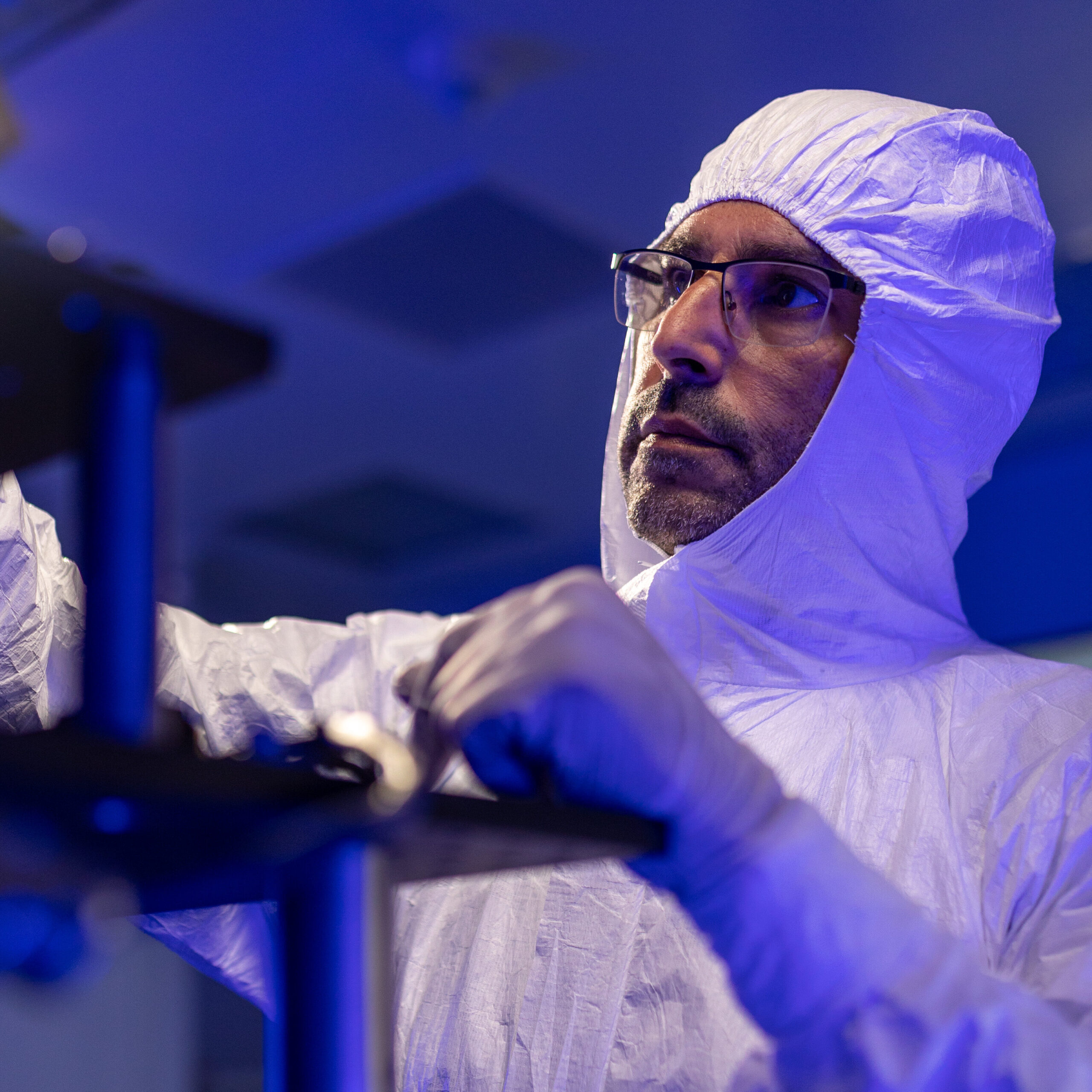
Certain applications (aeronautics, space, semiconductors) require exemplary cleanliness to avoid dust contamination. Arlumen's cleanrooms are designed to limit the entry of external pollution that could affect the cleanliness of parts. They are equipped with ISO5-certified laminar flow hoods, and the air is continuously monitored.
This enables us to assemble sensitive parts in a highly clean environment. The operators who work there follow strict procedures and use specific equipment to prevent particles from being carried around: overshoes, full-body overalls, single-use gloves, and the hood of the overalls...
adjustment and calibration
Beyond the quality of the assembly, the added value provided by Arlumen’s technicians lies in the fine-tuning of the systems. During the design and manufacturing phases, our engineering department defines the adjustment and testing procedures and designs custom test benches to carry out these operations, working closely with the technicians who will perform them.
This design is based on experience gained since 2009 and a wide range of completed projects; it is further enhanced by R&D work that enables us to acquire new expertise and master new technologies and measurement instruments. The technicians responsible for fine-tuning the systems are the ones who assemble the test benches.
What are the main components of an optical system?
An optical system can contain different types of components depending on the specific requirements of the project:
- Light source: laser, LED...
- Lenses of different types (convex, concave, aspherical...), sizes, shapes, materials (glass, plastic...)
- Mirrors of different shapes, thicknesses and quality. With different surface treatments.
- Wavelength or spectral width filters (bandpass, notch, lowpass, etc.)
- Beam splitters, prisms
- Imaging: cameras, sensors, lenses, collimators...
- Electronic components: electronic chips, integrated circuits, microcontrollers, resistors, diodes...
- Adhesive (optical or structural, strong, liquid or viscous, UV or air-curing...)
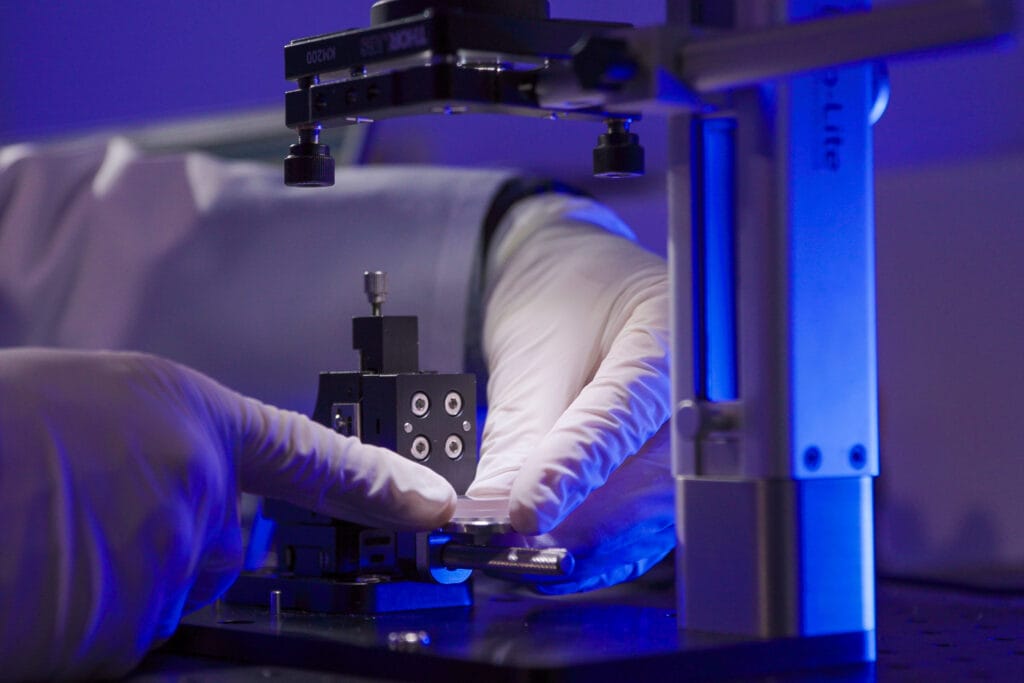
We use different adhesives depending on the desired bonding strength and the operating conditions of the optical system. Each type of adhesive has its own technical specifications that must be followed to ensure proper performance.
Assembling optical components sometimes requires the use of a UV-curing adhesive to bond the glass. In such cases, protective equipment—such as gloves and safety glasses—must be worn.
What tools are needed?
The assembly of optical systems calls on several fields. For each of them, specific tools are used:
- optical equipment: microscope, spectrometer (lambdameter), powermeter, luxmeter, led driver, light source, wavefront analyzer, USAF resolution test pattern, fiber inspector, cameras (visible, infrared, thermal)
- electronic equipment: oscilloscope, multimeter, stabilized power supplies, spectrum analyzer
- mechanical equipment: soldering iron, drill column, torque screwdriver, calliper, mechanical comparator (palmer), three-dimensional measurement, tools...
- hardware: control software, drivers, acquisition board, microcontrollers
- atmospheric and thermal equipment: oven, temperature probe, hydrometric measurement, gas and particle detectors, etc.
- ultrasonic bath
A few examples of Arlumen's optical assemblies
Arlumen produces both prototypes and mass production. Here are just a few examples:
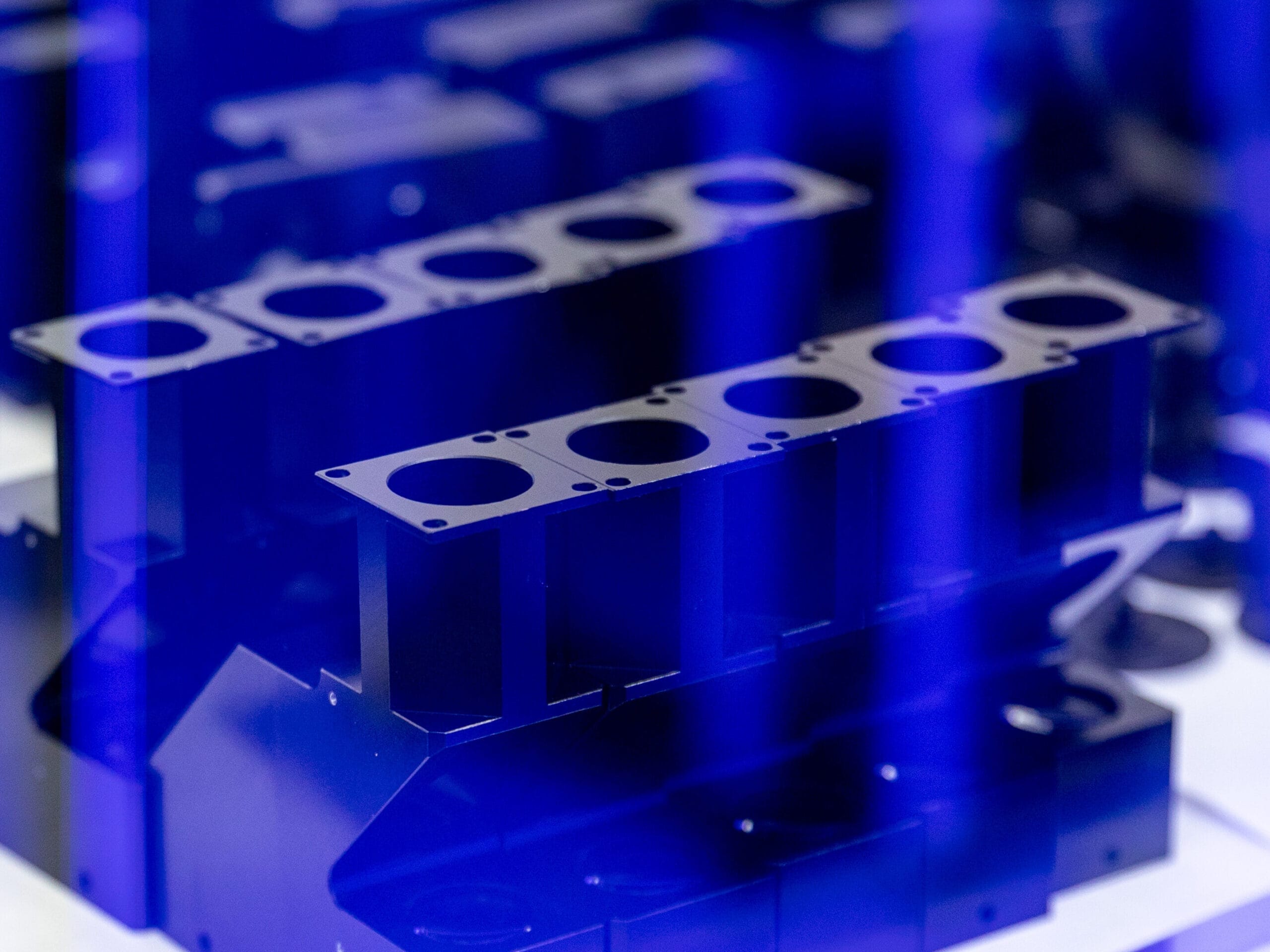
Series production
- Microscopic heads for component inspection (10 sets of 2 heads per year)
- Dental scanner (10,000 units produced in 5 years)
- LED lamps for marine lighting (1,200 units)
- Precision motorized systems (nearly 3,000 assemblies / year)
- Fluorescence sensors (between 30 and 50 sensors / year)
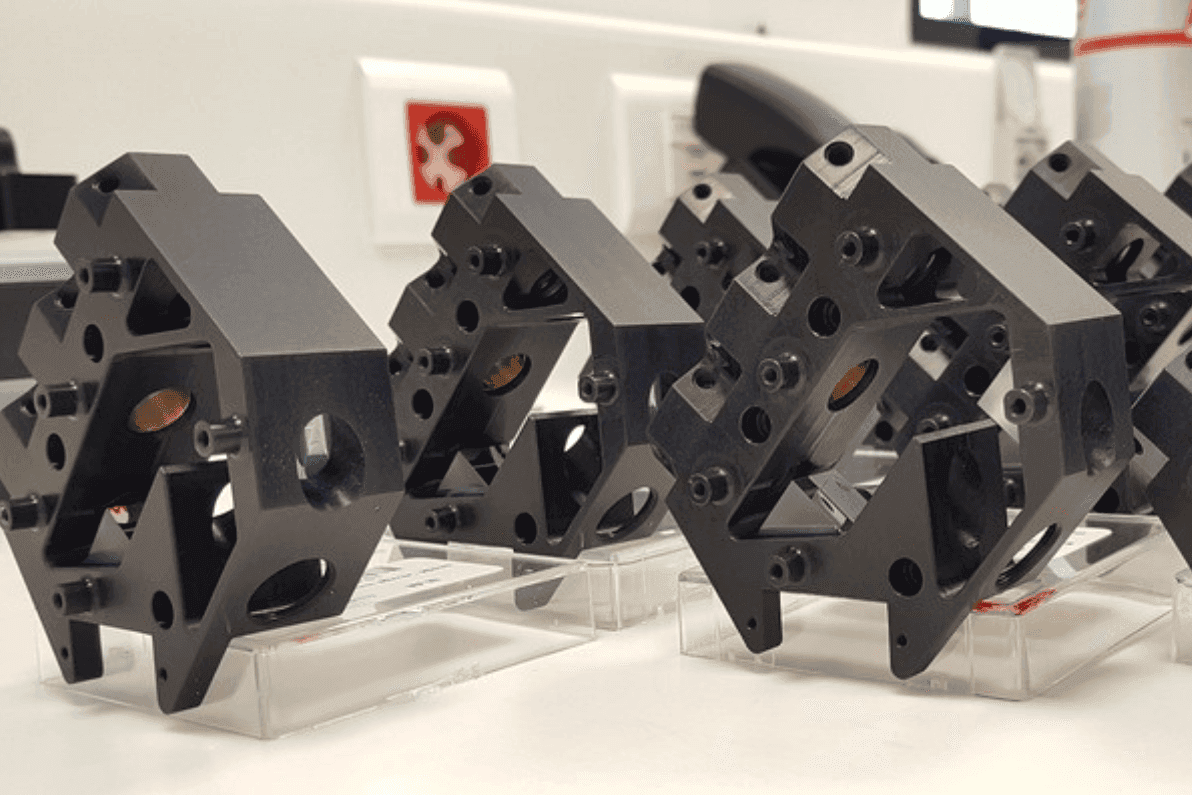
Pre-series
Laser deterrent (10 units)
Faced with the need to protect sensitive and strategic sites against intrusion, the customer wanted to develop a system capable of deterring intruders from a distance. Arlumen acted as an expert partner in optics and electronics to design, optimize and produce a high-power laser dazzle device, guaranteeing high performance and maximum safety under real-life operating conditions.
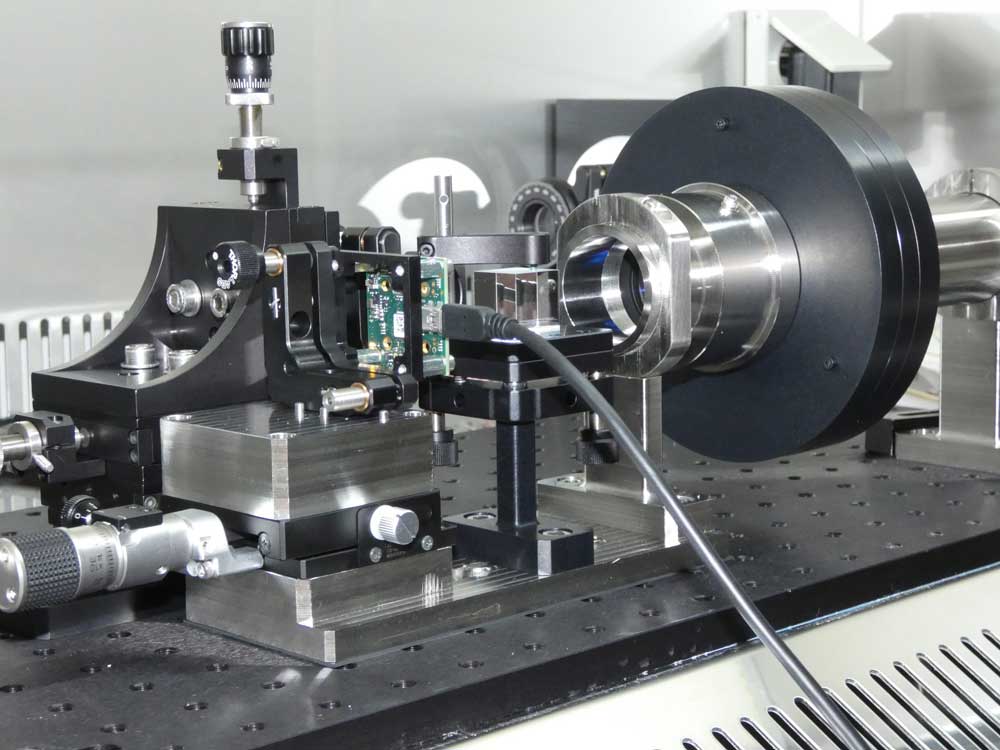
Prototype
Before launching the JUICE probe to Jupiter, Sodern needed to qualify its navigation camera, which is essential for navigating between planets and tracking its trajectory by observing moons and stars. Arlumen served as an expert optics partner to design, integrate, and optimize the moon and star simulator, enabling the camera to be qualified prior to launch under conditions identical to those in space.