With the goal of raising awareness about our field and the technologies we use, Arlumen has decided to publish a series of articles on fluorescence measurement systems. This article is the first in the series and describes the basic principles of fluorescence. Enjoy!
The principle of fluorescence
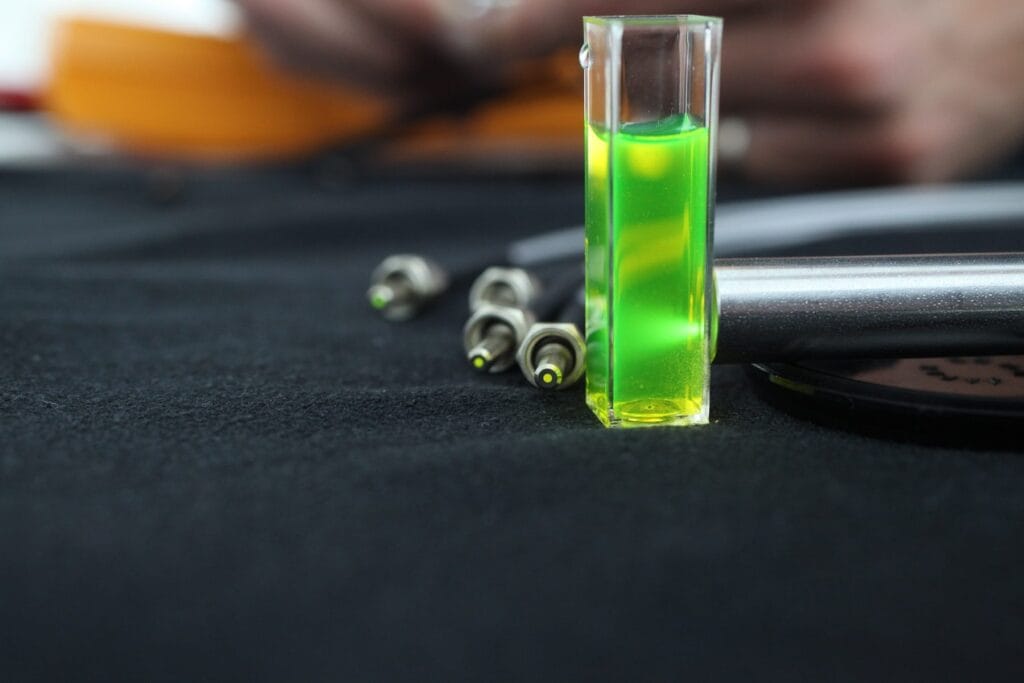
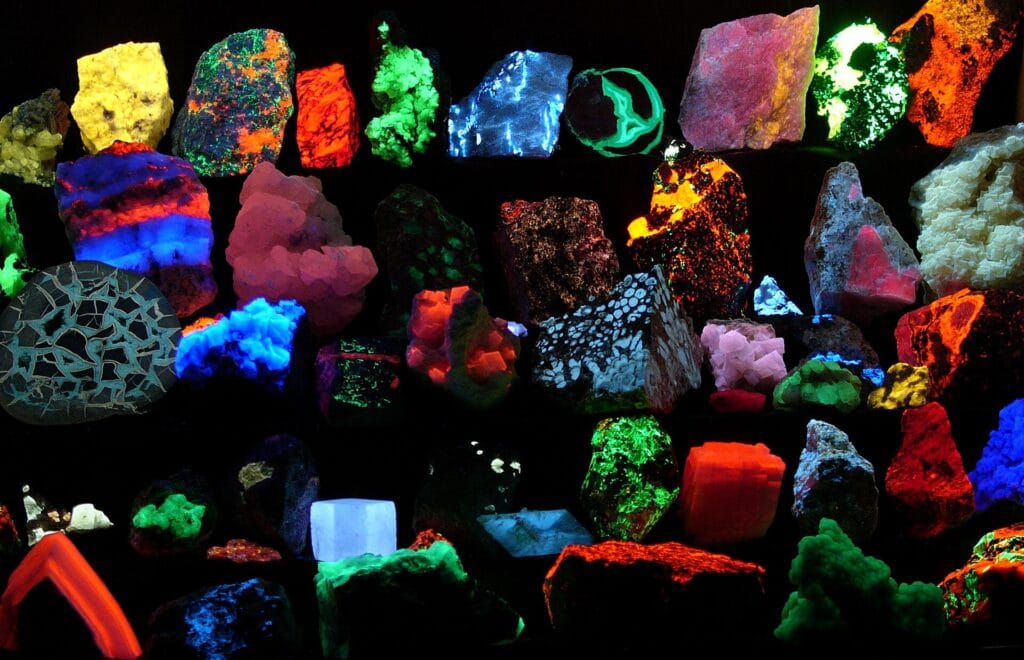
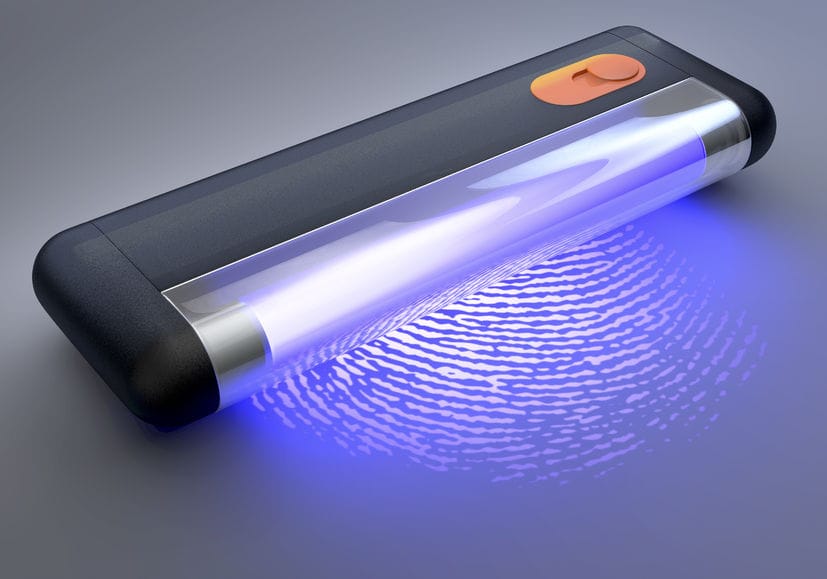
Fluorescence is a physical phenomenon resulting from a particular interaction between matter and an incident light source. Fluorescence is spontaneous light emission resulting from the excitation of electrons contained in matter by an excitation source.
The emission wavelength is usually longer than the excitation wavelength, but can also be shorter, particularly when using two-photon excitation.
In practice, there are two methods of implementing fluorescence measurement.
The first method uses a natural property of the compound in question, called autofluorescence. It exists for a number of organic compounds in particular, but also for different materials (glass, glue, treatments, etc.), and at very different levels of intensity.
This is a direct measurement of the compound, which is excited at a specific wavelength (usually in the UV-green spectrum) and emits naturally. In some cases, the level of autofluorescence is high enough and far enough away from the excitation wavelength to be measured directly.
When this is not the case, a second method is used. This involves using markers with a known fluorescence response, high enough in intensity and at wavelengths further away from autofluorescence. These markers are known as fluorophores or fluorochromes. These markers are molecules added to the sample to be analyzed, with the ability to bind to certain molecules at the end of a chain. In this way, the markers become the indicators of the presence of the components to be measured.
The analysis of light emitted by fluorescence can therefore be used to characterize samples by detecting the presence and concentration of certain components (molecules, micro-organisms, etc.).
Fluorescence measurement
In order to set up a fluorescence measurement system for a sample, it is first necessary to know its characteristics, i.e. its absorption and emission curves. This makes it possible to determine the source to be used to excite the sample, as well as the wavelengths at which the emitted signal will be analyzed.
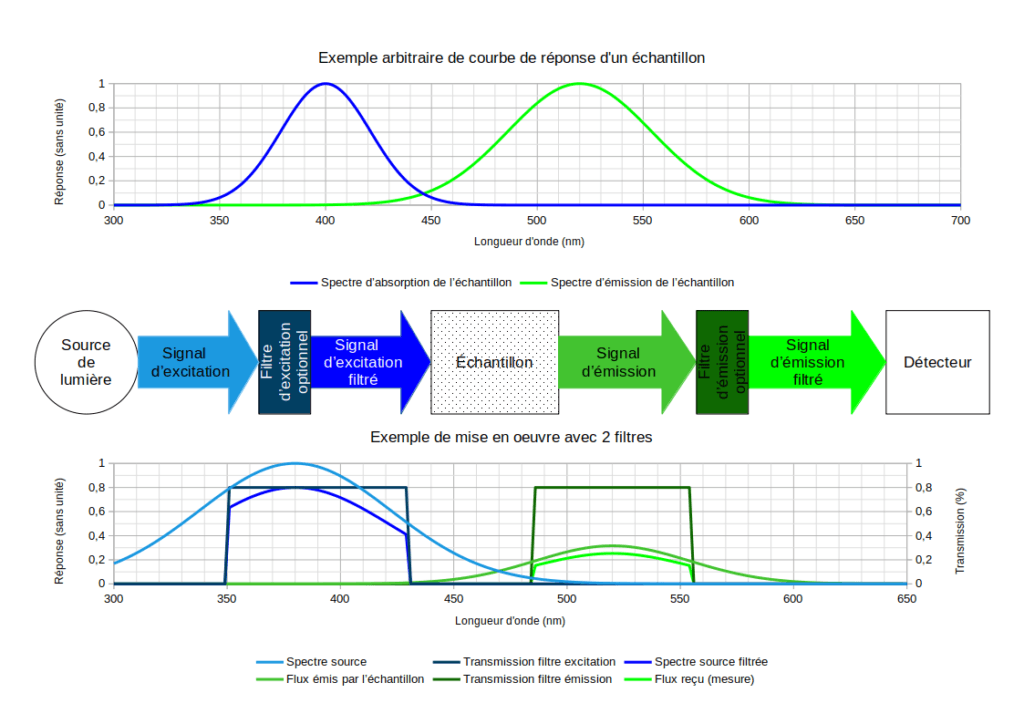
These data are sometimes available in the literature, but otherwise need to be determined in the laboratory, using spectro-fluorimetric measurements, for example, to determine the excitation and emission spectra of a given species.
Once the client has determined these photobiological and/or photochemical characteristics, Arlumen applies its expertise in photonics to design and develop the optoelectronic measurement system that will enable the samples to be analyzed on-site.
Depending on the application and the customer's needs, several architectures can be developed, such as fluorescence microscopy or fluorescence spectroscopy.
The final system architecture depends on numerous parameters, such as the media to be analyzed (solid, liquid, gas), the available space, the measurement environment, the target budget, the desired information...
Various examples of applications and developments carried out by Arlumen will be presented in forthcoming articles. Follow us on Linkedin to discover them as soon as they are published!