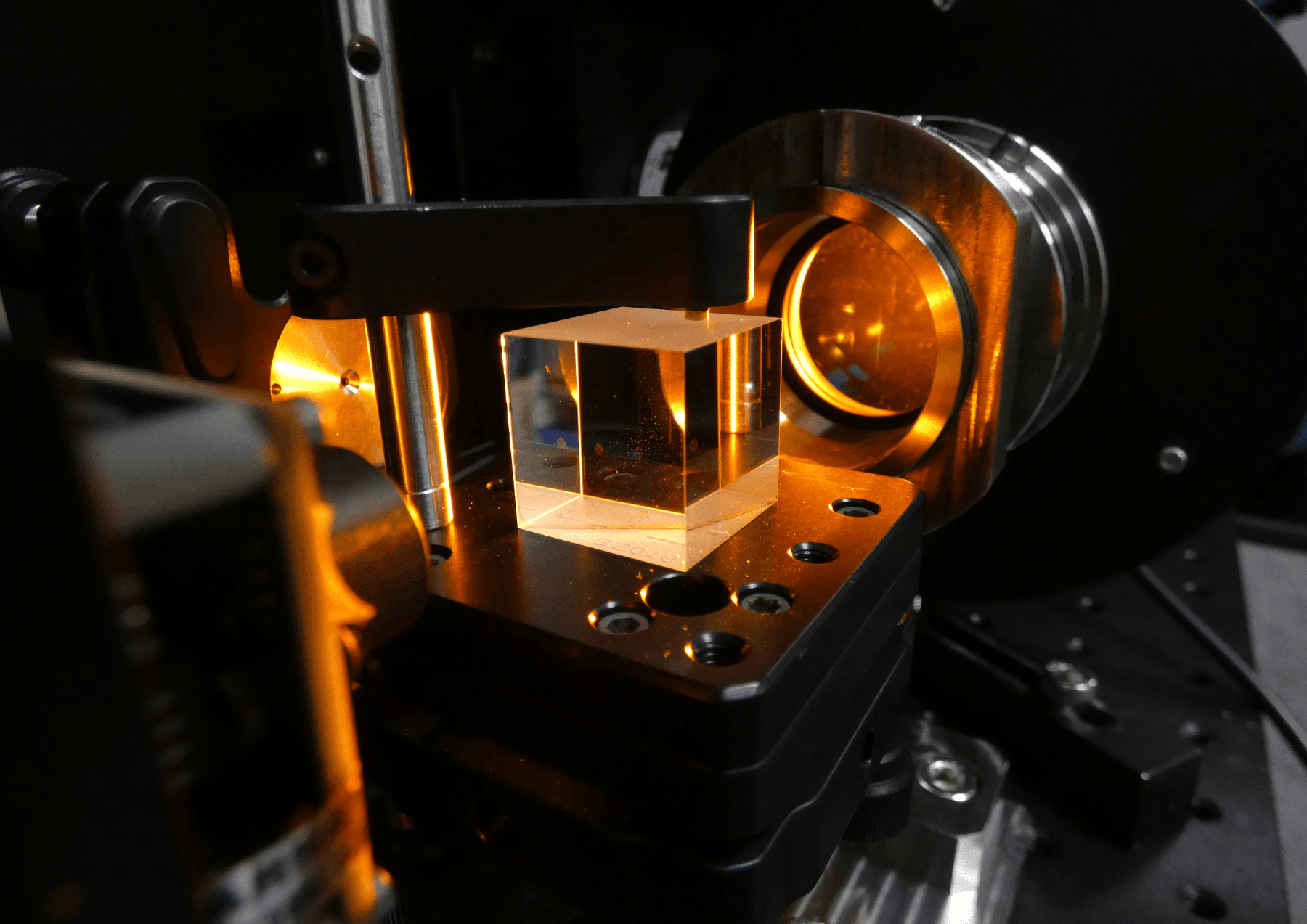
Photonics encompasses the sciences and technologies that emit, capture or transform light - in other words, the flow of photons. Laser, microscope, optical fiber, camera, telescope... From innovative technologies to everyday objects, photonics is everywhere!
To highlight the diversity of photonics applications, here are a few examples of photonic optical systems that are useful in our daily lives. In a nod to our company's Breton roots, each optical example is linked to our home region of Brittany!
Examples of optical systems in everyday life:
- Lighthouses, complex optical systems that light up our coasts
- Floodlights to light up our festivals
- Why is the sea blue? An optical phenomenon
- Optics at the heart of your cameras
Lighthouses, complex optical systems that light up our coasts
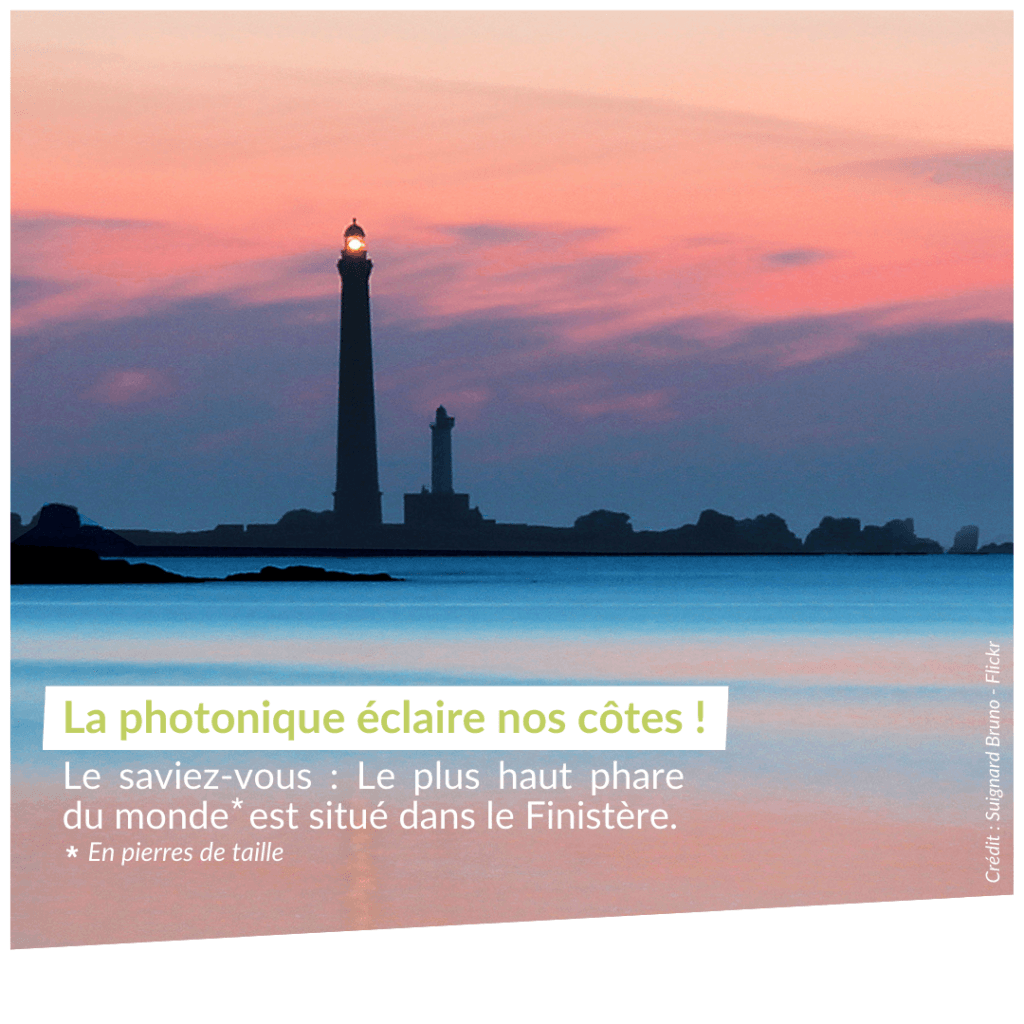
Did you know that the lighthouses and beacons on our coasts are made up of photonic systems? In fact, the world's tallest lighthouse (made of cut stone) is... in Finistère! Located in Lilia Plouguerneau, the Île Vierge lighthouse stands 82.5m high. It was built between 1897 and 1902. It is the world's tallest lighthouse, built of ashlar. Its light can be seen from over 42 kms away!
Our beautiful region is home to numerous lighthouses, which guide maritime traffic off the coast. To ensure that their light beams are visible from afar, lighthouses are equipped with powerful optical systems.
These systems consist of a light source and a lens based on the Fresnel principle, to increase the range of light and reduce its size.
At the end of 2009, Arlumen won the national Lighthouses and Beacons call for projects. Our team designed and manufactured optical systems with LED lighting to replace the old halogen systems on the French coast. Today, our systems are still in use on the French coast!
Floodlights to light up our festivals
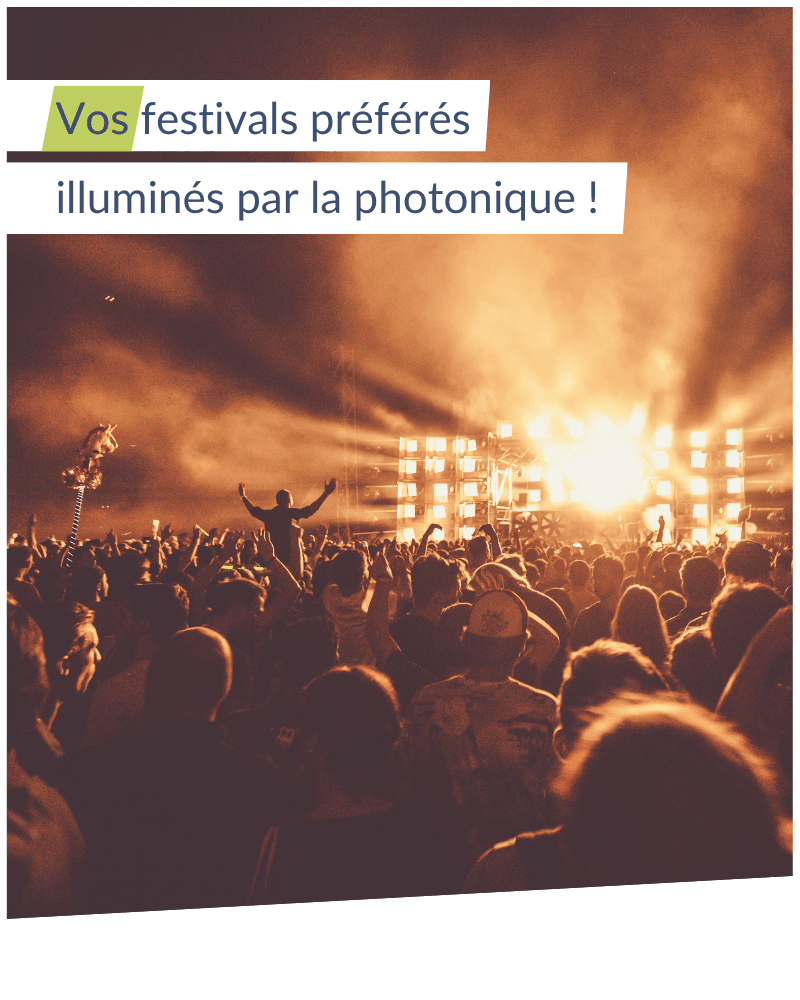
Your favorite festivals are lit by photonics! Every summer in Brittany, it's festival season: Les Vieilles Charrues, Le festival du Roi Arthur, La Fête du bruit, Le Festival du bout du monde... Organizers of these events use innovative spotlights to illuminate stages and performers. There are different types of projectors, equipped with lenses, mirrors and filters, depending on the effect required.
Stage projectors meet a wide range of needs to produce ever more impressive stage effects: Illumination distance, light intensity, size of lighting zone, sharp or blurred edge, colorimetry and color filters, speed of beam movement, flash and strobe effects, rapid transition between on and off, thermal tolerance, ultraviolet rays and fluorescence of objects...
Most lighting systems are now equipped with LEDs. This means lower energy consumption and less overheating than the old incandescent lamps. At your next festival or concert, take the time to observe these optical systems that are indispensable to the world of entertainment!
Why is the sea blue? An optical phenomenon
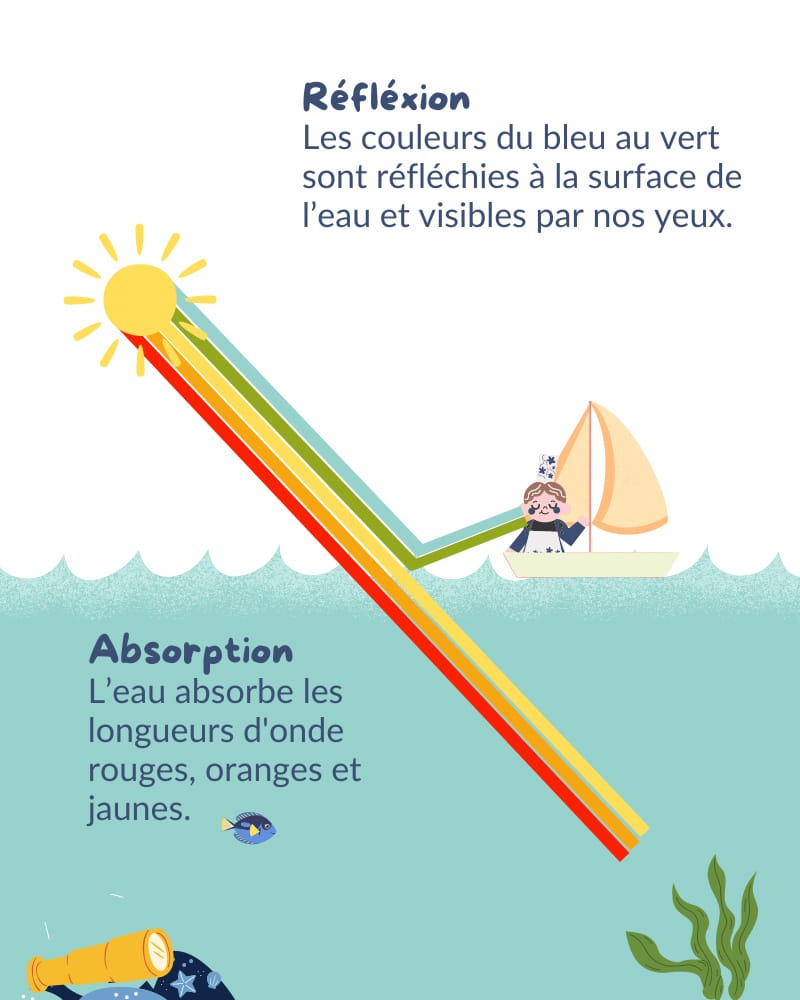
Solar radiation is white light composed of several wavelengths.
Each wavelength is responsible for a color in the visible spectrum.
When white light (the sun's rays) strikes the surface of water, some is reflected (returned) and some is refracted (absorbed by the water molecules).
Water absorbs red, orange and yellow wavelengths, while the others are re-emitted. This is what gives the colors of the sea, from blue to green, more or less intense depending on the depth or nature of the bottom.
In Brittany, we are blessed with magnificent shades of blue along our coasts. On our beaches, the shallow waters seem turquoise and crystal-clear.
Offshore, the great expanses are deep, intense blue.
At Arlumen, we love the Dellec beach, just a stone's throw from our Technopole d'Iroise premises.